



Difference Between Diploma, Degree & Certification Courses
Students often get confused while choosing between diploma, degree, and certification courses. Each course type has different durations, learning objectives, career benefits, and job opportunities. Understanding these differences helps students make better career decisions.
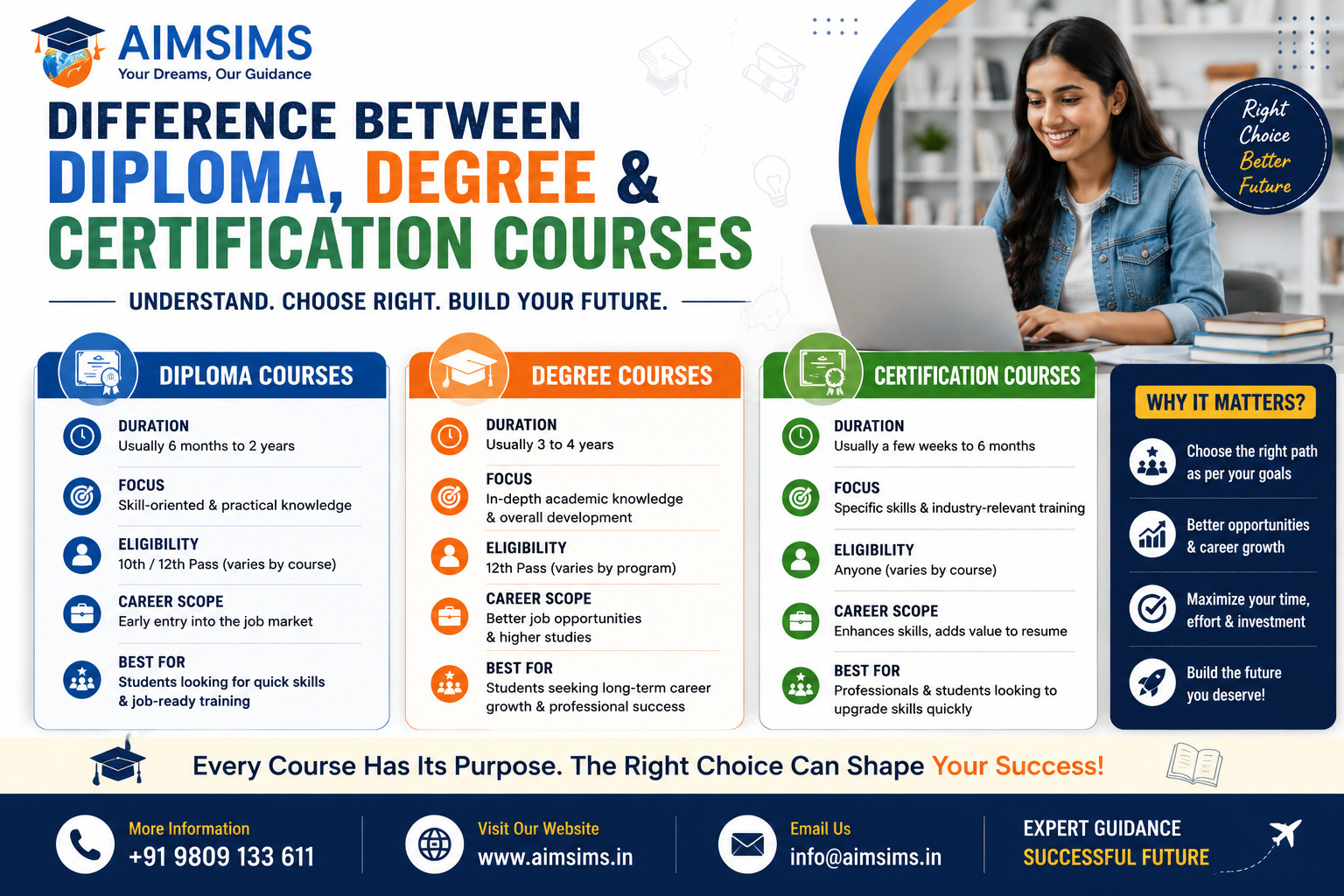
A degree course is a long-term academic program offered by universities and colleges. Degree programs usually take three to four years to complete for undergraduate studies and one to two years for postgraduate studies. These courses provide detailed theoretical and practical knowledge in a specific field.
Degree programs are suitable for students who want strong academic qualifications and better long-term career opportunities. Common degree courses include B.Tech, BBA, B.Com, BA, MBA, and M.Sc. Many professional careers and higher-level jobs require degree qualifications.
A diploma course is shorter than a degree course and focuses more on practical and skill-based training. Diploma programs usually take six months to three years depending on the field and institution. These courses are ideal for students who want quick employment opportunities or technical skills.
Diploma courses are available in areas such as engineering, healthcare, hospitality, graphic design, digital marketing, and computer applications. Students who want to start working early often choose diploma programs because they are affordable and career-focused.
Certification courses are short-term programs designed to teach specific skills or specialized knowledge. These courses may last from a few weeks to several months. Certification programs are useful for students, professionals, and job seekers who want to improve their skills or stay updated with industry trends.
Popular certification courses include digital marketing, data analytics, cybersecurity, web development, AI tools, spoken English, and project management. Certifications help candidates improve their resumes and increase job opportunities.
When comparing all three options, degree courses provide broad academic knowledge and better long-term growth, diploma courses offer practical training and faster job entry, while certification courses focus on skill enhancement and specialization.
Students should choose a course based on their career goals, budget, interests, and available time. Taking proper career guidance before selecting any course can help students build a successful future.